Sri Lanka’s Beaches: A Complete Coast-by-Coast Guide
With 1,340 km of coastline and two opposing monsoons, somewhere is always in season. How the coasts differ, when to go where, and the standout beaches on each. Sri Lanka packs roughly 1,340 km of remarkably varied coastline into a small island, from the surf-dominated reef breaks of the south to the shallow, glassy lagoons of the east.
On this page
The big picture
Sri Lanka packs roughly 1,340 km of remarkably varied coastline into a small island, from the surf-dominated reef breaks of the south to the shallow, glassy lagoons of the east and the wild, post-conflict shores of the north.
The single most useful thing to understand is the dual monsoon. The south-west monsoon (“Yala”, roughly May to September) soaks the west and south, while the north-east monsoon (“Maha”, roughly December to February) brings rain to the east and north. The practical upshot: the island is a year-round beach destination, you just move coasts with the calendar.
When to go where
December to April: the south and west coasts are at their best, Galle, Mirissa, Unawatuna, Bentota, Hikkaduwa. This is also blue-whale season off Mirissa.
May to September: flip to the east, Arugam Bay’s surf fires, and Nilaveli, Trincomalee and Pasikudah offer calm, clear swimming. The north (Jaffna, Mannar) is also driest in this window.
Shoulder months work on either coast; just expect the occasional shower and check the monsoon advisory before committing a beach week.
The south-west: Galle’s resort & surf belt
This is where Sri Lankan beach tourism began. Bentota is the polished resort anchor, watersports, Ayurveda and Geoffrey Bawa-designed hotels on a river-mouth peninsula. Kosgoda nearby runs community turtle hatcheries.
Hikkaduwa marks the backpacker-and-surf trail: a shallow coral sanctuary, turtles at Turtle Beach, and easy breaks at Narigama. Round the corner, Unawatuna is a reef-protected swimming bay with lively nightlife, ringed by photogenic micro-beaches, Dalawella and Wijaya (the palm rope-swing), Jungle Beach for snorkelling, and the stilt fishermen of Koggala just east.
The deep south: surf & seclusion
From Ahangama to Tangalle the coast turns rugged and surf-rich. Weligama’s broad, mellow bay is the island’s best beginner-surf classroom; Midigama and Ahangama hold advanced reef breaks (“Rams”, “Lazy Left”, Kabalana’s “The Rock”) and have gentrified fast into a café-and-boutique scene.
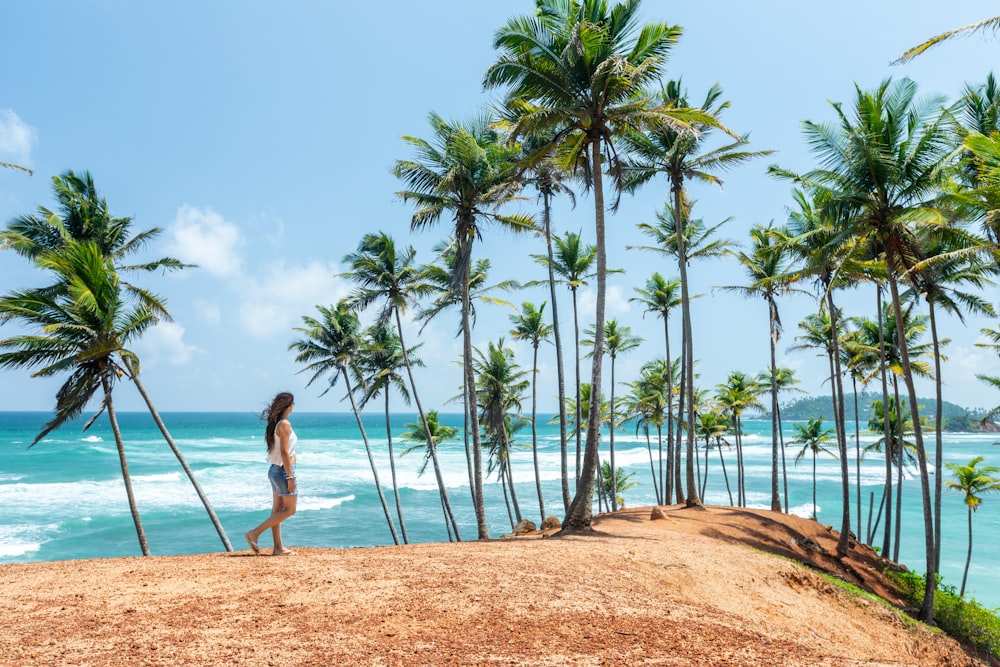
Mirissa is the southern nightlife and whale-watching hub, with Parrot Rock and Coconut Tree Hill. Beyond it, Hiriketiya’s horseshoe bay is a bohemian surf-and-yoga magnet, while Tangalle’s string of coves, Goyambokka, Silent Beach, Mawella, trade nightlife for solitude. Rekawa is a renowned wild turtle-nesting beach.
The east: point breaks & shallow reefs
Arugam Bay is the country’s surf capital, a 10 km run of right-hand point breaks (Main Point, Whiskey Point, Peanut Farm, Elephant Rock) that peaks May to September.
Further north, Batticaloa’s Pasikudah offers some of the world’s longest shallow-reef shoreline, waist-deep, glassy water for hundreds of metres. Trincomalee’s Uppuveli and Nilaveli are powder-white and the launch point for snorkelling at Pigeon Island; Marble Beach and the rice-grained sands of Arisimale are quieter gems.
The north: limestone coasts & isolation
The least-developed coastline, raw and recovering. Casuarina Beach on Karainagar (reached by causeway from Jaffna) is the peninsula’s premier strand, shallow turquoise water shaded by casuarina trees.
The far north holds wind-swept curiosities: Manalkadu’s dunes burying a ruined Dutch church, Talaimannar’s rusted railway pier and wild horses on Mannar, and Delft Island’s feral ponies and baobabs. Infrastructure is minimal, come for emptiness, not amenities.
The west: Colombo, Negombo & Kalpitiya
The arrival coast. Negombo, minutes from the airport, makes a convenient first or last night with a wide beach and a lively fish market. Mount Lavinia is Colombo’s golden-sand sunset strip.
North, the Kalpitiya peninsula is the kite-surfing capital, with seasonal dolphin and whale watching off its deep offshore trenches.
Travel responsibly
Sri Lanka’s reefs are under pressure, much of the coral at Hikkaduwa and Polhena has died from the 2004 tsunami, warming seas and unregulated snorkelling. Don’t touch or stand on coral, and choose operators who keep their distance.
The bright spot is community conservation: Rekawa and Kosgoda show that protecting turtle-nesting sites (rather than exploiting them) sustains both wildlife and local income. Visit nesting beaches with the established conservation projects, at night, without flash.
Sources: [2]
Full beach directory by region
The complete catalogue from the research, tap a region to expand.
West & North-Western
South-West (Galle district)
Deep South (Matara & Hambantota)
East (Ampara, Batticaloa, Trincomalee)
North (Jaffna & Mannar)
Frequently asked
Which side of Sri Lanka has the best beaches right now?
Is it safe to swim at Sri Lankan beaches?
Which beach is best for surfing?
Places in this guide

Sources
- Charlotte Plans a Trip, Best beaches of Sri Lanka ↗
- Wikipedia, List of beaches in Sri Lanka ↗
- Wikipedia, Tourism in Sri Lanka ↗
- Back-Packer.org, 7 most beautiful beaches ↗
- Dimaak Tours, Best beaches in Sri Lanka ↗
- Wikivoyage, Western Province (Sri Lanka) ↗
- BH Lanka Tours, Hidden beaches ↗
- Sri Lanka Travel Pages, Jaffna ↗
- Lanka Excursions Holidays, Mannar Island ↗
- Beachmap, Beaches in Sri Lanka (maps & guides) ↗
We compile and link to public sources; details change, so verify time-sensitive specifics before you travel.